This is not a Sacrifice
This piece began with reading of research showing the how people are generally unwilling to sacrifice comfortable and convenient lifestyles for the greater ecological good (Crowe, 2020). I was led to wonder what sacrifice really is, and whether living more simply – more mindfully with the land and within ecological limits – was that much of a sacrifice considering all that is at stake.
In my experience, cultivating a sense of wholeness through connection with self, with land and nature close to home – quiet and unglamorous as this might initially appear – can be a deeply fulfilling practice, one that creates space for a contentment I find more genuine than that promised by consumerism, productivity, and more commercialized forms of gratification.
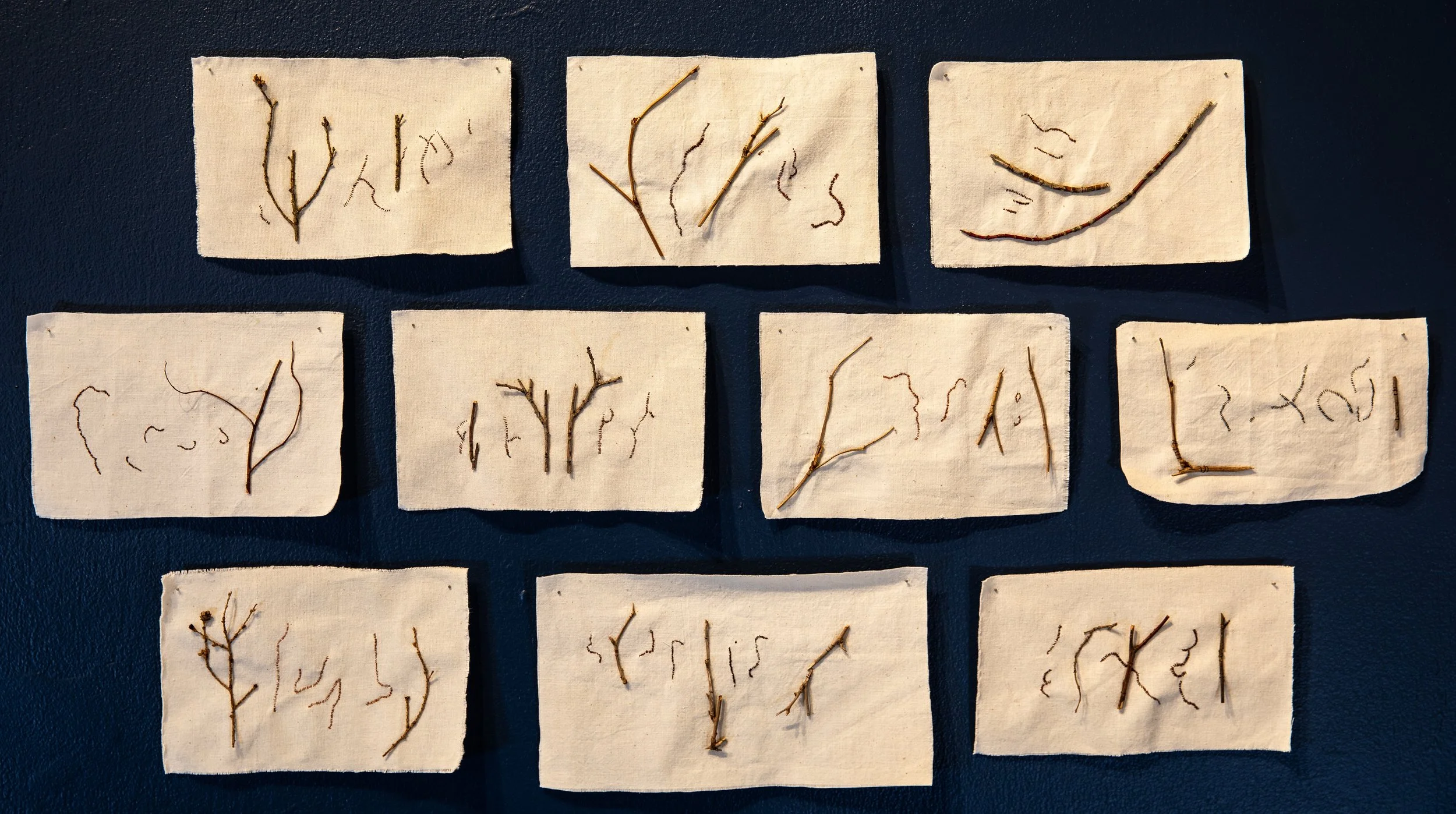
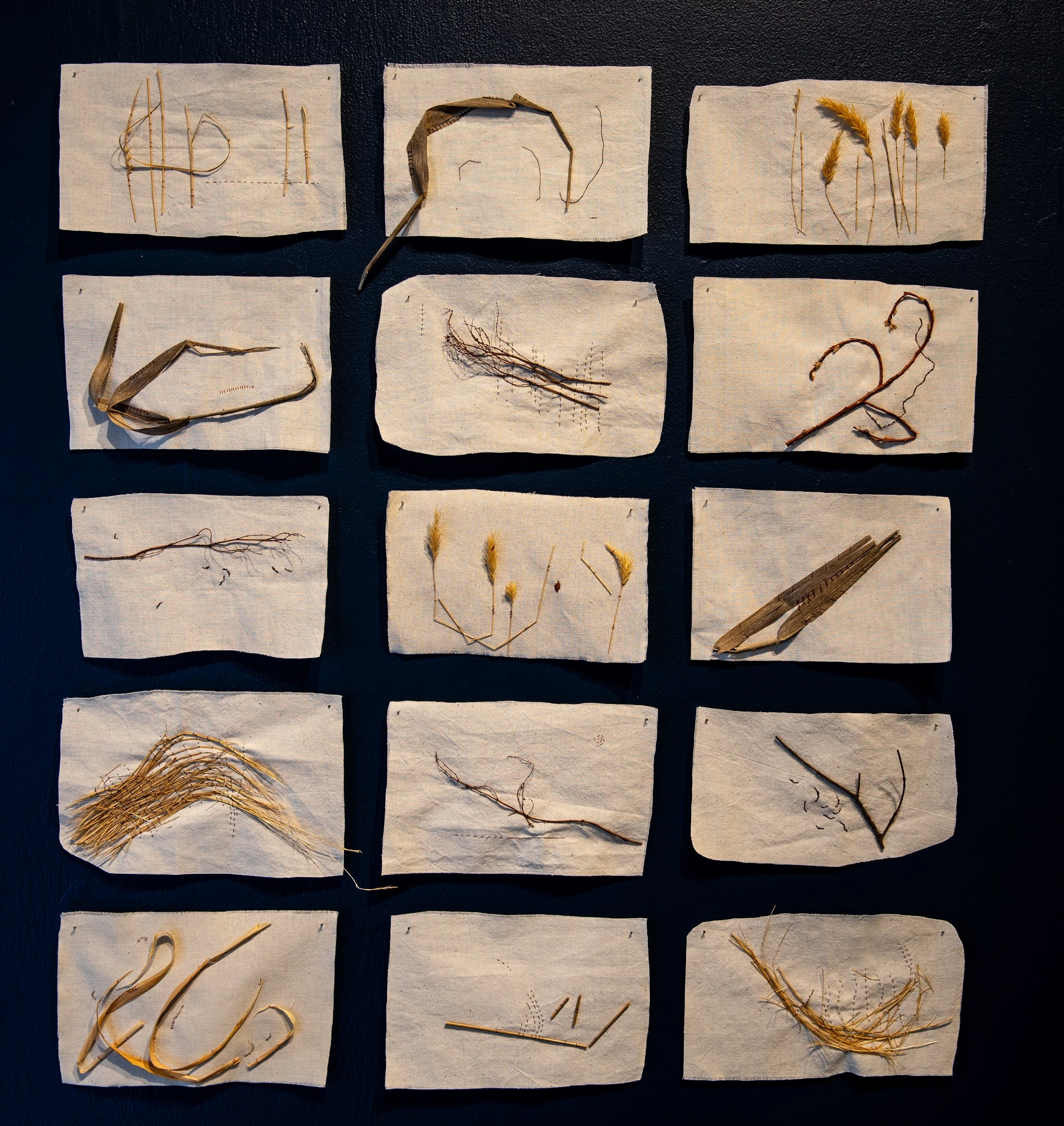
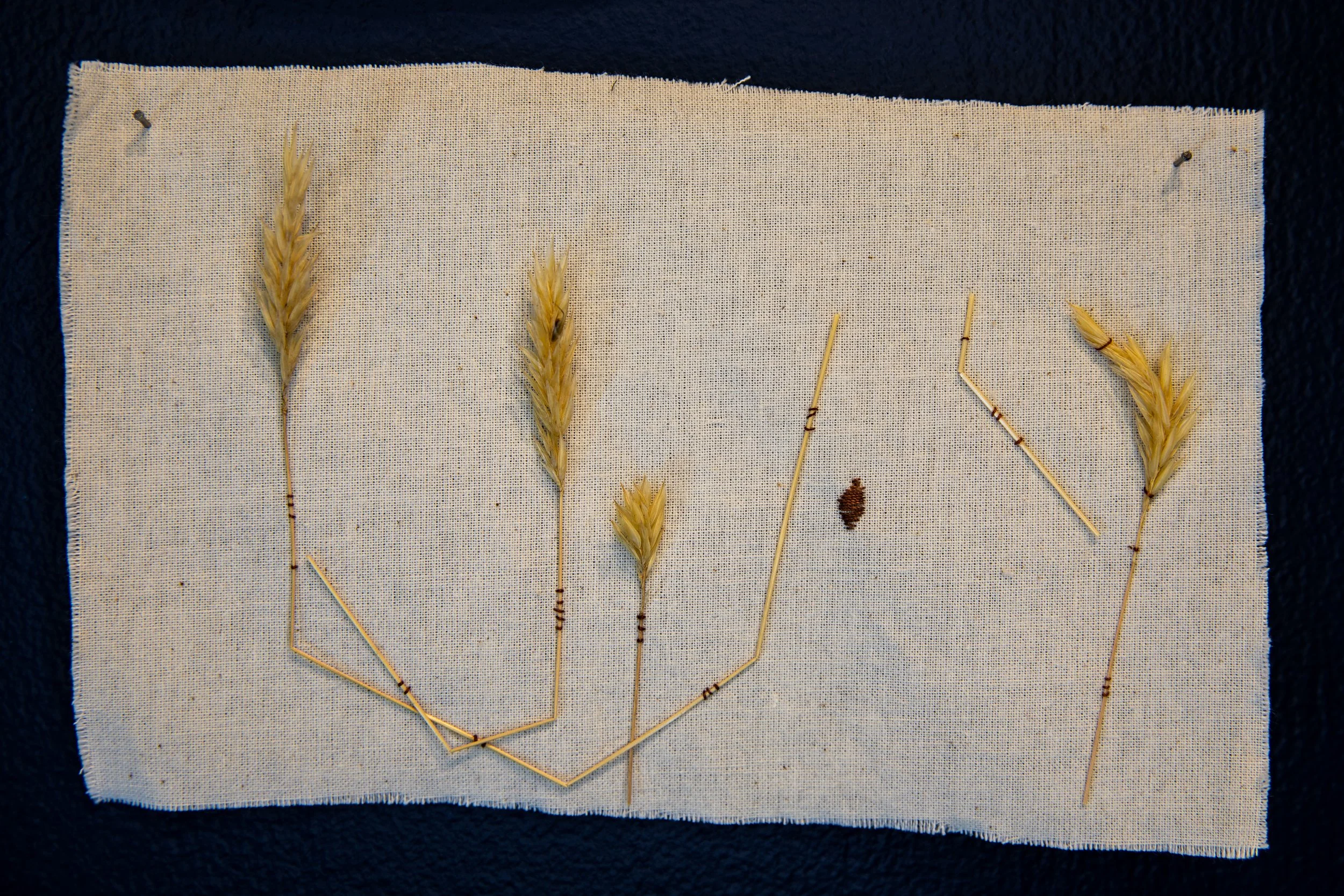
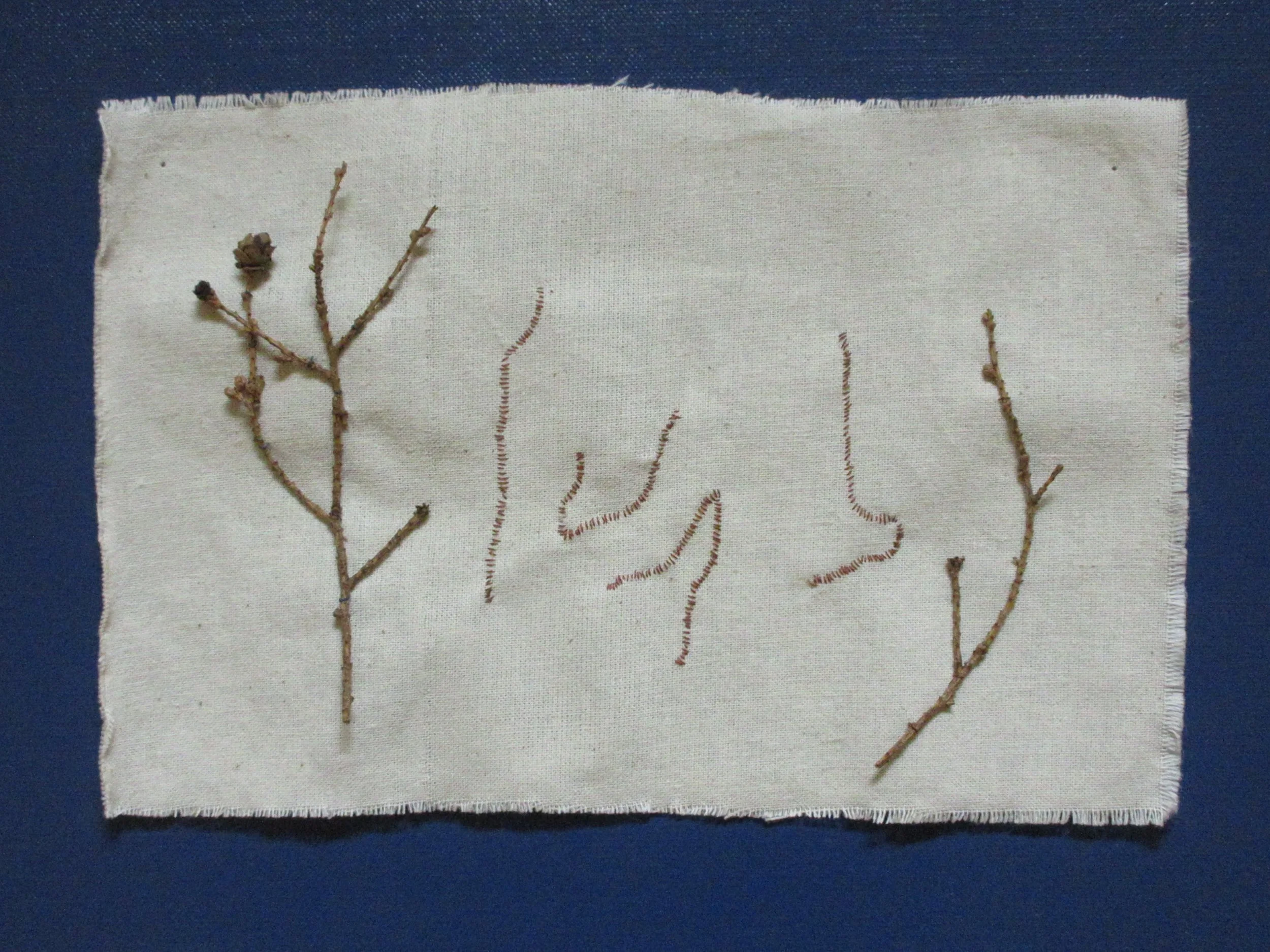
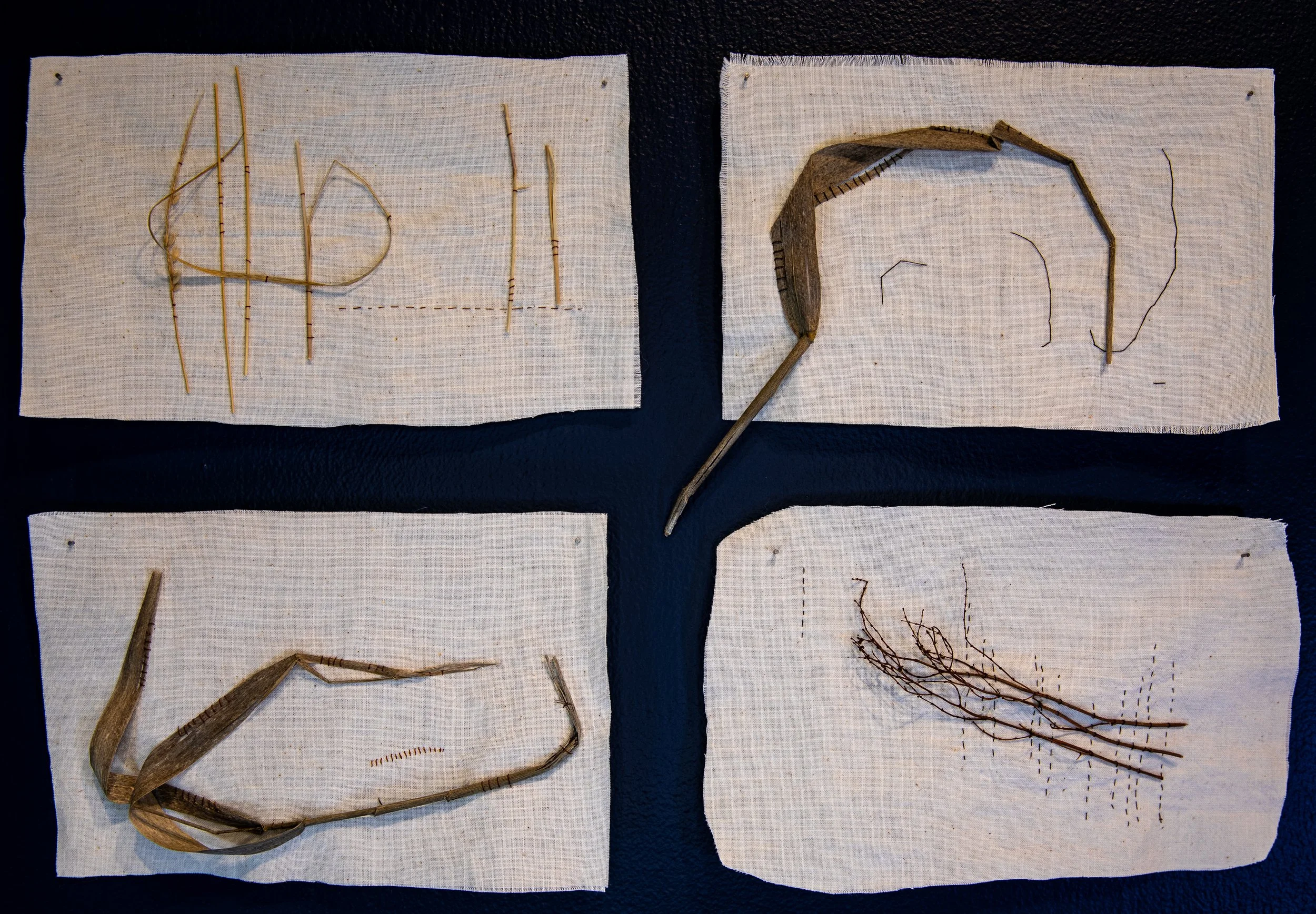
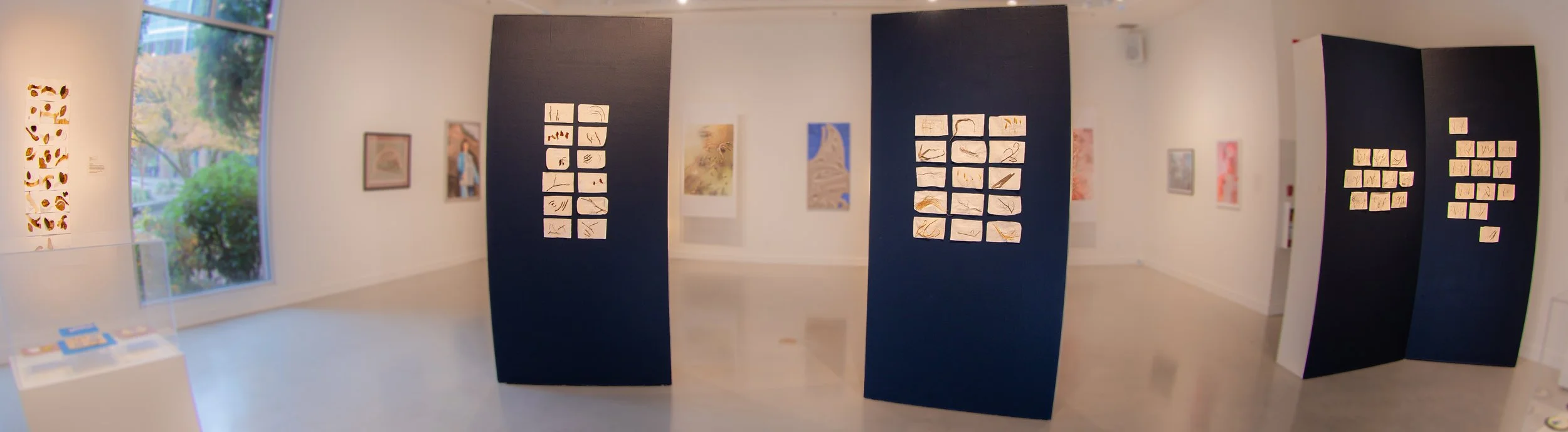
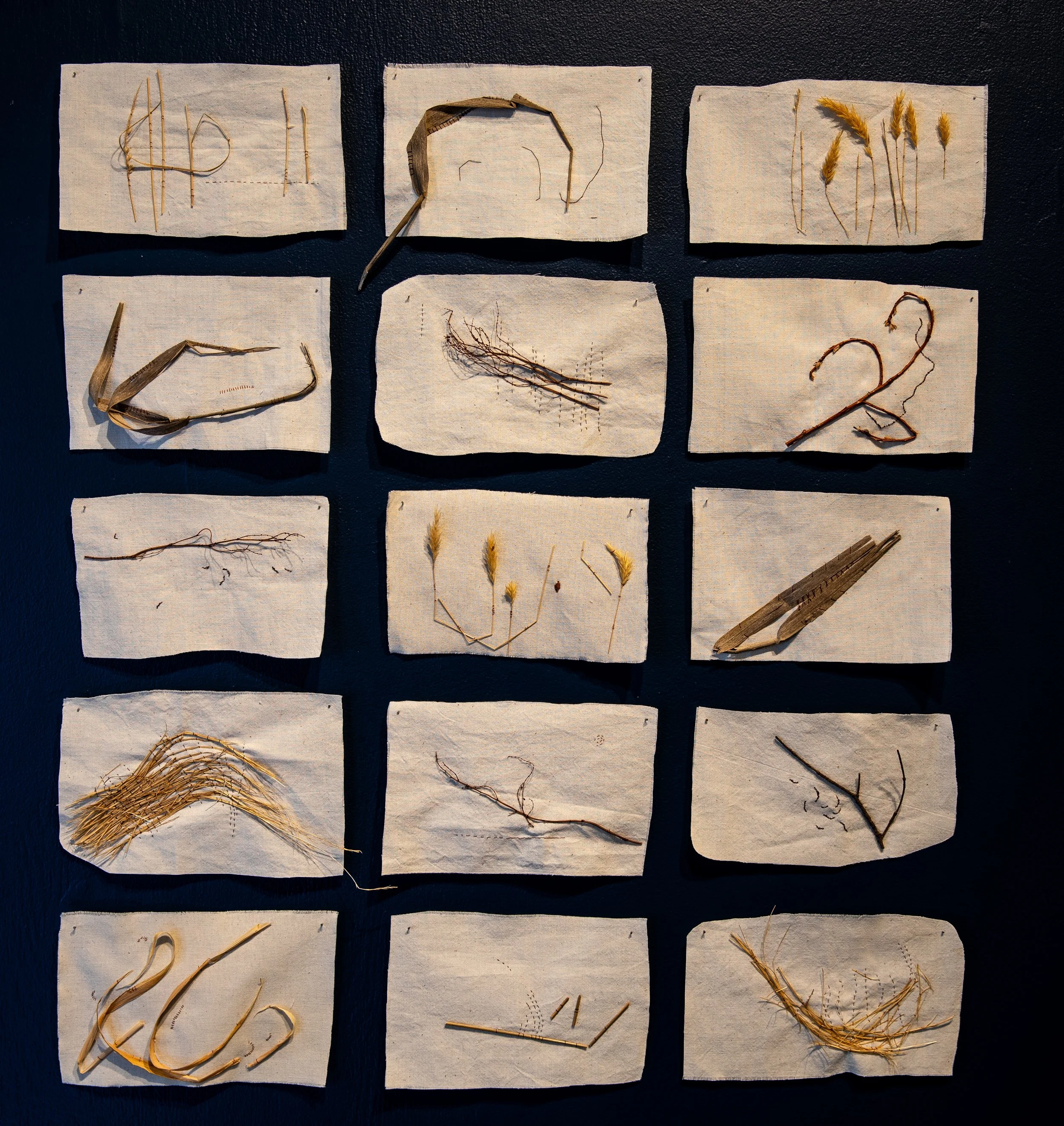
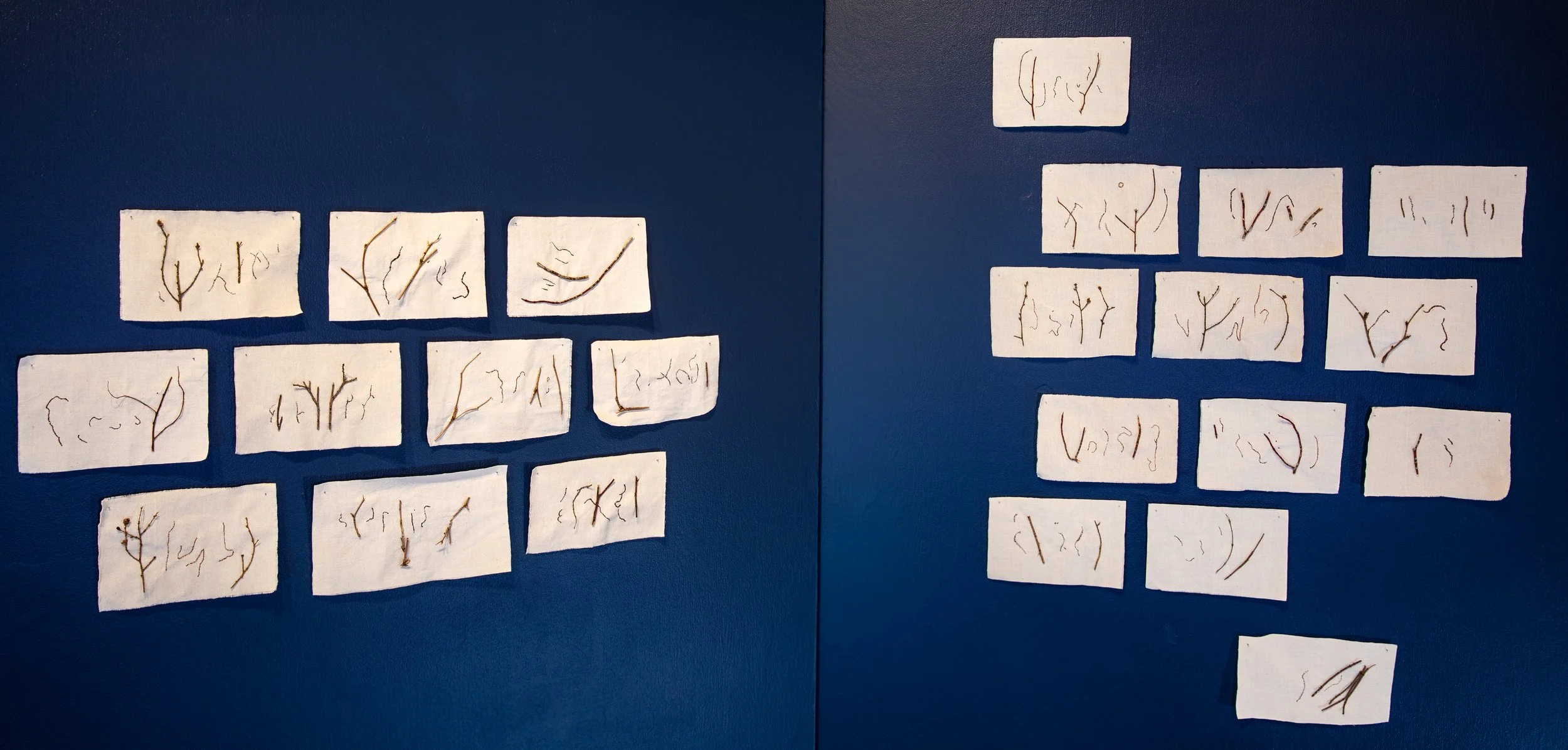
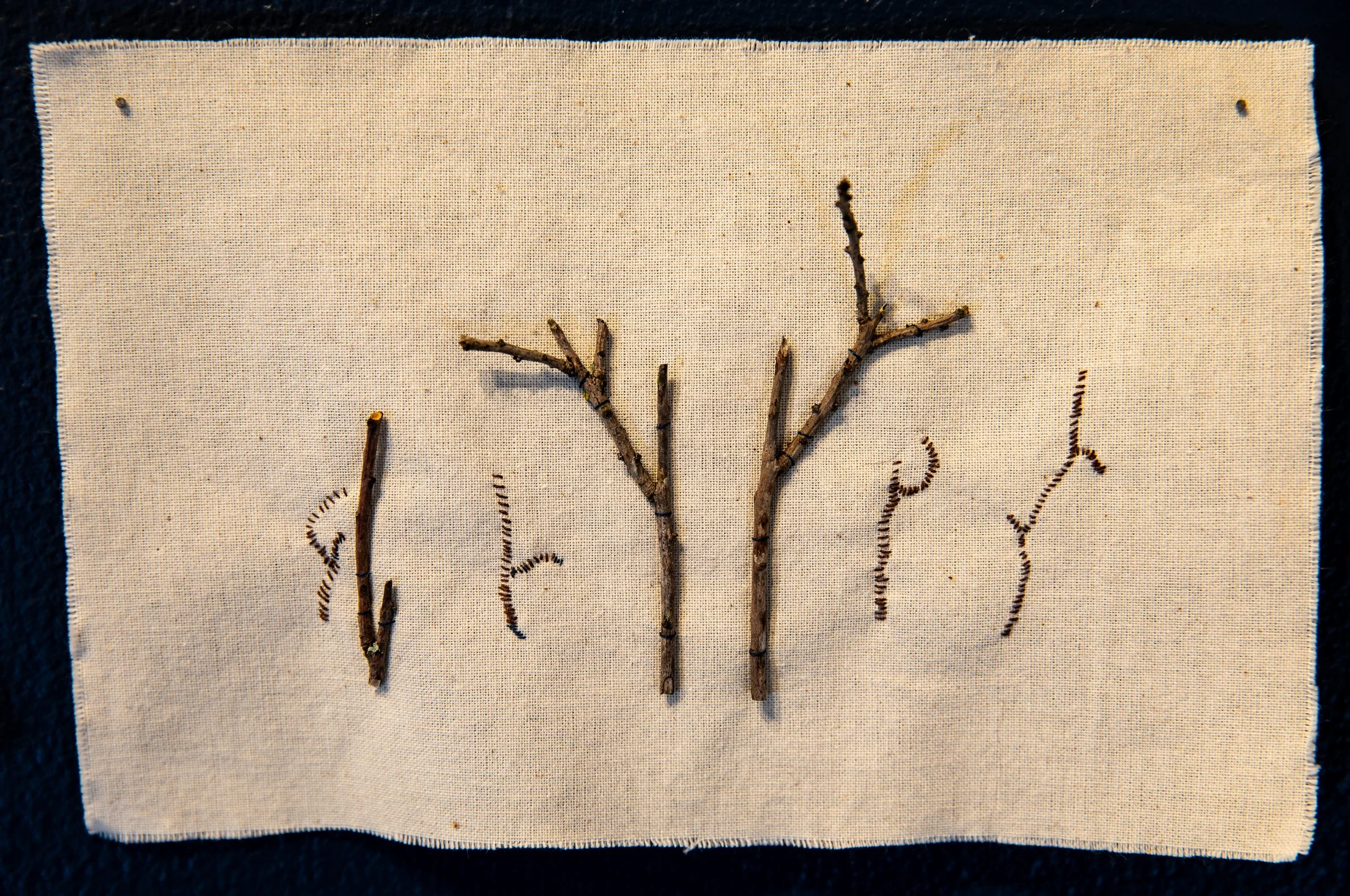
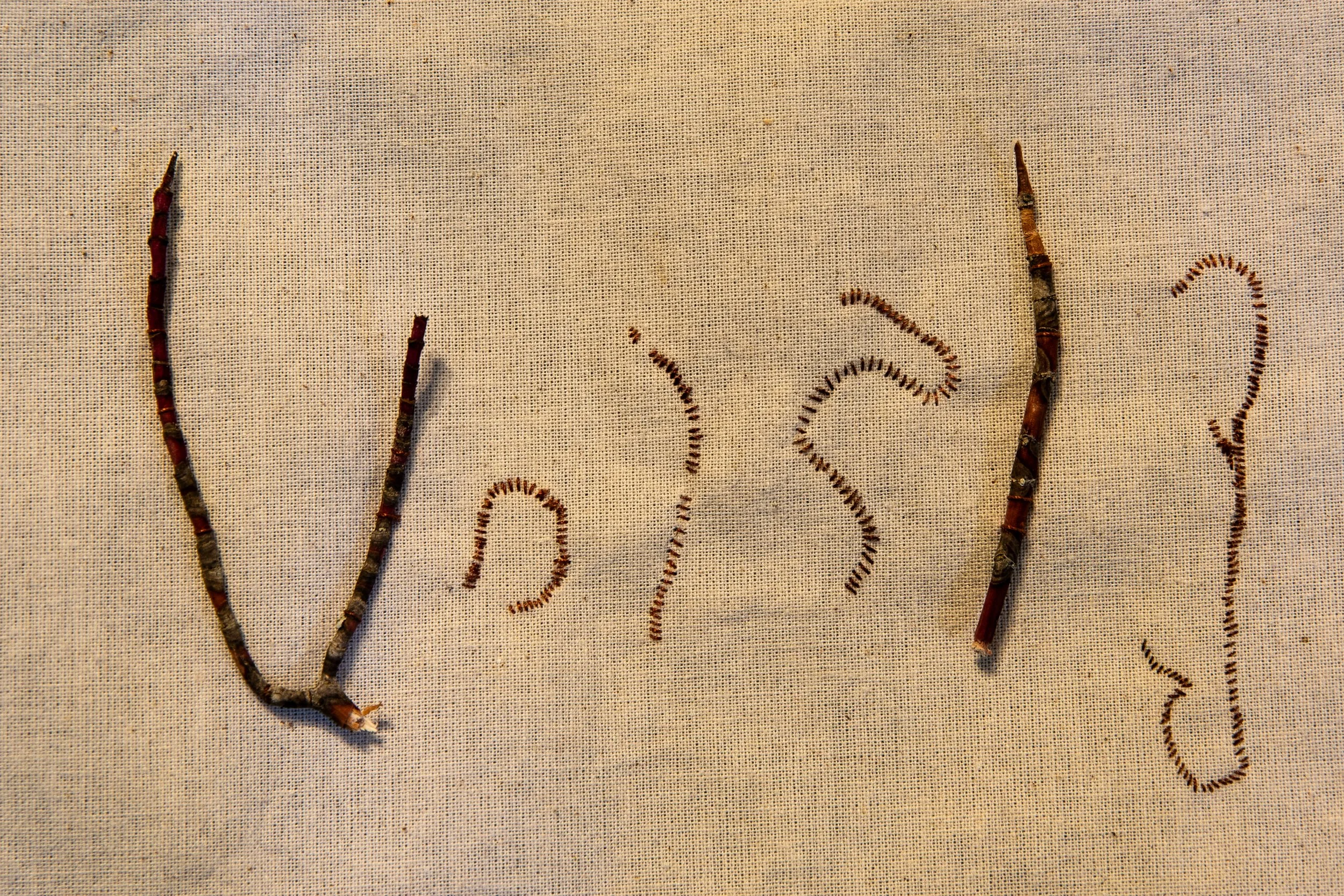
In the process of carefully gathering local natural materials, I came to better know my home ecologies and those of the places I frequent: what grows where and in what seasonal rhythms. I wanted to allow the plant materials to be the main voice, with my response to them a humble accompaniment. Their forms were the guide, and my stitching followed their lead. Some of the pieces also suggest an alternate non-logocentric form of language, inquiring how we may more holistically, wordlessly, connect us with local forms of life.
Salmonberry, thimbleberry, blackberry, hemlock twigs, alder twigs, various grasses, Garry oak, vine maple, stitching on canvas.